An Infinite Number
A film by Anthony Sherin (work-in-progress)
“I saw an infinite number.”
~Jacques Cartier, Prince Edward Island, July, 1534
“The destruction of the Passenger Pigeon has meant a loss as severe as if the Catskills or the Palisades were taken away. When I hear of the destruction of a species, I feel just as if all the works of some great writer has perished….”
~ Theodore Roosevelt, February 16, 1899
AN INFINITE NUMBER: The Extinction of a Species

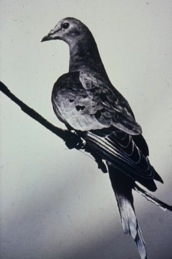
Martha, 1914
Introduction
An Infinite Number is the story of the Passenger Pigeon. Once the most plentiful bird on the planet, its numbers were in the billions. They flew in 300-mile long flocks that eclipsed the sun for days. But in the 19th century, ‘pigeoners’ hunted them to extinction. The last of the species, Martha, died in the Cincinnati Zoo in 1914. President Roosevelt echoed the nation in mourning the destruction of the Passenger Pigeon. For a time, their extinction made them a potent symbol for an emerging conservation movement.
In 2005, E.O. Wilson, Professor Emeritus, Harvard University, estimated “we may be losing species at a rate of 30,000 per year, or an overwhelming three per hour.” Today, Martha’s body is in storage at the Smithsonian’s Museum of Natural History in Washington D.C., and the Passenger Pigeon is all but forgotten.
But what remains of the Passenger Pigeon besides Martha is a remarkable written legacy, preserved in archives, of a species once known as the “living wonder of the New World.” An Infinite Number will revive the story of the Passenger Pigeon, illuminate the consequences of our recklessness, and inform today’s fight to conserve species, ecosystems and the planet.
An Infinite Number is an animated documentary. No film footage exists of the Passenger Pigeon.
The History and Destruction of a Species
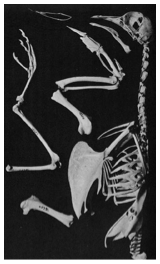
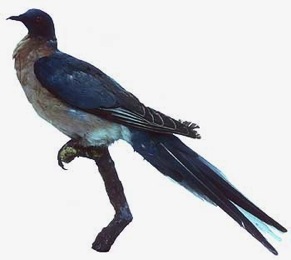
Passenger Pigeons were up to 18” tall, much larger than the common pigeon found in cities today. The male’s breast was red, his neck an iridescent gold, emerald green and rich crimson, his head and back a grayish blue, and his lower body white. Females were considered “scarcely less beautiful” and it was claimed, “no bird ever had a bolder, more unflinching eye.” Flocks flew at an astounding 60 mph. and reached a top speed of 90 mph. With long tail and wing feathers and powerful breast muscles, the passenger pigeon evolved to fly for long periods with speed, grace, and maneuverability. John James Audubon remarked that “when an individual is seen gliding through the woods and close to the observer, it passes like a thought, and on trying to see it again, the eye searches in vain; the bird is gone.”
The highly social Passenger Pigeon not only flew in great flocks, but nested and foraged in vast colonies as well. J.M. Wheaton witnessed a flock feeding in 1859 and noted that
“… those in the rear, finding the ground nearly stripped of mast [nuts], rose above the tree tops and alighted in front of the advance column. This movement soon became continuous and uniform, birds from the rear flying to the front so rapidly that the whole presented the appearance of a rolling cylinder having a diameter of about fifty yards, its interior filled with flying leaves and grass. The noise was deafening and the sight confusing to the mind.”

Museum of Natural History
Tragically, the birds were hunted for their meat on an industrial scale. The location of flocks was transmitted via telegraph and the expanding railroads transported carloads of birds to the markets in cities. The term ‘stool pigeon’ comes from the practice of sewing shut the eyes of a live Passenger Pigeon and tying it to a stool. The bird would flutter before alighting on the ground, a signal for a passing flock to land. Then, a net sprung over ground-feeding birds could capture 500 or more. A single shotgun blast into a passing flock might bring down a hundred birds at once. Even cannons were used. Sulfur placed under nest-laden trees overwhelmed both parents and hatchlings, dropping them stunned or dead at hunters’ feet. Trees were set aflame. Such scenes of slaughter echoed with the screeches of wounded and dying birds, the beating of wings, crashing tree limbs, shotgun blasts, and the shouts of excited hunters.
“But where are all these birds now?” Forest and Stream asked in May 1883. Extinction ended the slaughter.
We understand now that the ‘pigeoners’ killed so many birds in the 1870′s that the species was doomed. Even as their numbers dwindled, wanton destruction of the birds continued. From Petoskey, MI. in 1879, site of one of the last recorded large nestings, railroad shipments totaled upwards of 1,500,000 dead and 80,000 live birds. These numbers do not include birds shipped via steamer, or the daily express shipments hauled away in boxes and bags by shotgun brigades.
By 1886, Forest and Stream reported that only two flocks were believed to exist, one in Pennsylvania and the other in Indian Territory, OK. When the Pennsylvania flock was discovered hunters killed tens of thousands of birds and the nesting for that year was fatally interrupted. In the fall of 1897, Auk reported a flock of seventy-five to one hundred birds in Nebraska, while Forest and Stream published reports of Wisconsin flocks ranging in size from only ten to fifty. The last recorded sighting of wild a Passenger Pigeon was a single bird in Ohio on March 24, 1900. A young boy shot and killed it.
In 1909, a decade too late, a concerted effort was made to determine, once and for all, if Passenger Pigeons survived outside of captivity. At a meeting of the American Ornithologists’ Union plans were announced for an extensive search and a $1000 award was offered for the discovery of a nest or bird. The reward drew national attention and was the lead story in the popular magazine The Youth’s Companion:
“Every boy in the United States and Canada, east of the Rocky Mountains, will want to join in the effort to find and save the passenger pigeon. Thirty-two years ago [1877] this bird, one of the most renowned in American history, filled the sky in millions – a living wonder of the New World…. If this splendid species is gone, it will be the saddest case of wanton extermination in the history of America.”
After the search was halted on October 31, 1912, the loss of this bird sparked a burgeoning conservation movement. The plight of the Passenger Pigeon finally captured the imagination of the country. An article in Auk, in 1914, reflected a new consensus to protect endangered species:
“The reduction of this once abundant bird to absolute extermination by man’s greed should be a lesson to us all and stifle all opposition to the efforts now being made by national and state governments in behalf of the conservation of other birds threatened with a like fate.”
The Film

Passenger Pigeon, stuffed
In the opening scene of the film a mist gathers in the distance on an otherwise empty screen. The cloud thickens as it approaches, and with a roar the landscape is swept into darkness as a flock of Passenger Pigeons eclipses the sun. In another sequence, the amassing flock will begin to feed over a vast landscape and will slowly transform into an enormous rolling cylinder. Sound effects will recreate the deafening whirl of the rotating mass. Gradually, the vast and beautiful spectacle that was the Passenger Pigeon will diminish as hunters decimate flock after flock. Trees laden with birds will go up in flame. Guns will fell hundreds at once. Packed rail cars will haul away millions upon millions until finally the skies are empty.
Since the great flocks were decimated before the invention of the movie camera, animation will evoke the exuberance and vigor of a bird that flew with explosive speed in what was once believed to be an infinite number. The film will be submitted to festivals and designed for broadcast as a 30-minute program.
Recent films provide inspiration for An Infinite Number. In PLANET EARTH, a BBC documentary, the Baikal Teal, a small duck whose entire population is about 300,000, flies in an astoundingly beautiful single mass, with aerial patterns and maneuvers not unlike those of the Passenger Pigeon. In WINGED MIGRATION, an Academy Award nominated documentary, avian biologists and zoologists hand-raised several species of migratory birds from egg to adult and trained them to fly inches away from cameras mounted on small “ultralight” planes, paragliders, motorboats, trucks and hot air balloons. MARCH OF THE PENGUINS is an Academy Award winning documentary about the Emperor Penguin, a flightless bird from Antarctica that lives in vast colonies and like the Passenger Pigeon, thrives in the collective interdependence of a flock.
The simplicity and elegance of Japanese woodcut prints (rather than the more naturalistic and detailed images found in a Pixar or DreamWorks movie) will influence the animation. I plan to depict the behavior of the Passenger Pigeon as accurately as possible and the narrative will be based on the writings of eyewitnesses such as John James Audubon’s description of a flock from Birds in America:
“I cannot describe to you the extreme beauty of their aerial evolutions, when a Hawk chanced to press upon the rear of a flock. At once, like a torrent, and with a noise like thunder, they rushed into a compact mass … and swept close over the earth with inconceivable velocity, mounted perpendicularly so as to resemble a vast column, and, when high, were seen wheeling and twisting within their continued lines, which then resembled the coils of a gigantic serpent.”